Conversion Rate Calculator
Measure your marketing success with our free Conversion Rate Calculator! Track sales, sign-ups, and campaign performance in seconds. Optimize your strategy and boost ROI-no math skills needed!
Results
Conversion Rate (%): 0%Conversion Rate: 0
Share Calculator


Business Calculators | |
Table of Contents
- 1. What is Conversion Rate?
- 2. Conversion Rate Calculation Formula
- 3. Conversion Rate Calculation Examples
- 4. Conversion Rate Calculator: Figure Out and Boost Your Conversion Rate
- 5. Conversion Rate Optimization (CRO)
- 6. What Factors Affect Your Conversion Rate?
- 7. How Do Digital Channels Affect Conversion Rate?
- 8. What Causes a Poor Conversion Rate?
- 9. What Makes for a Good Conversion Rate?
- 10. What's a Good Conversion Rate for Ecommerce?
- 11. How Do Reviews Affect Conversion Rate?
- 12. Should you measure conversion rate by sessions or by visitors?
- 13. FAQs About Conversion Rate Calculator
What is Conversion Rate?
We are going to talk about conversion rates. Let us know how we can optimize our conversion rate, increase it a little, and make it effective. So first of all, let me tell you what this conversion rate is. Our goal is regarding conversion; if we consider it a conversion for ourselves and want to make sales, then those sales will be a conversion for me to tell you what this conversion rate is. Our goal is regarding conversion; if we consider it a conversion for ourselves and want to make sales, then that will be a conversion for us. If we have to get a lead form filled out, then filling out the lead form, if that activity happens, if that action is taken, then it will be a conversion for us. It depends, meaning conversion can be different for different things, and there can be different conversions in part scenarios. Now we have come to know what conversion is.
Now, when we create our website, let's take an example: our website is an e-commerce website, and we sell any products there. Whenever we create our website, what is the first target? To sell it, we have to bring maximum traffic to it. The first thing is traffic there, after that, they will see our product and buy it. When traffic comes to our website, what do we monitor to see if traffic is converting?
Let's take an example: if 100 people came to your website and only one of them converted, then what is your conversion percentage? One percent. This is our conversion rate here. 1. percent. Now you tell me what you have to do: take this conversion rate gradually upwards; in other words, increase it gradually.
Conversion Rate Calculation Formula
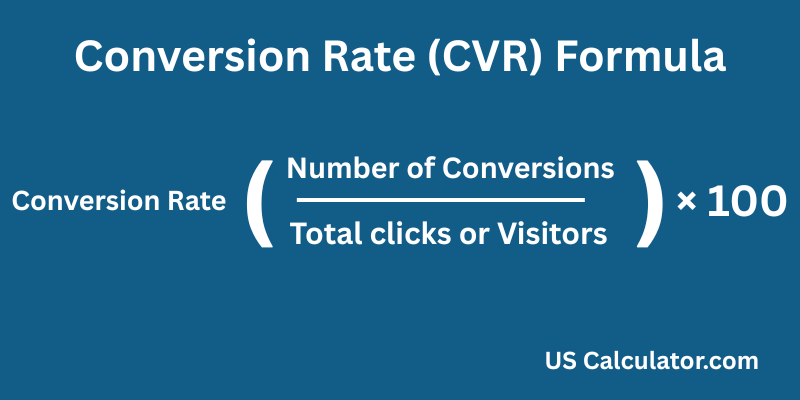
The formula for calculating the conversion rate is simple and effective:
| Conversion Rate (%) = ( |
| ) × 100 |
Conversion Rate Calculation Examples
Example 1: Calculating the E-commerce Conversion Rate
Imagine you run an e-commerce website, and during a specific period, you had 1,000 visitors to your site. Out of these visitors, 50 made a purchase. To calculate your e-commerce conversion rate:
| Conversion Rate (%) = ( |
| ) × 100 |
In that instance, your e-commerce conversion rate will be 5%. In other words, your website visitors who bought from it were 5% of the visitors to your website.
Example 2: How to Calculate Shopping Cart Conversion Rate
Now let's look at an instance where you want to test your Shopping Cart efficiency. During this month, we saw 500 people fill up their shopping carts, and 100 people ended up making the purchase. To calculate the shopping cart conversion rate:
| Conversion Rate (%) = ( |
| ) × 100 |
Your shopping cart conversion rate, in this example, would be 20%. This indicates that 20% of visitors who added items to their cart went on to make a purchase.
Conversion Rate Calculator: Figure Out and Boost Your Conversion Rate
Ever wonder how many people actually do what you want on your website? Maybe that's making a purchase, signing up for a newsletter, or clicking a specific link. Knowing this helps you see if your marketing (and your website itself) is working the way you hope. That's where a conversion rate calculator comes in—it makes the whole process simple. You just plug in two things: how many people visited and how many of them “converted” (took the action you wanted). The calculator spits out a percentage, and that number tells you how well your site or campaign is doing.
Here's a quick example: If 100 people visit your site and 5 end up buying something, your conversion rate is 5%.
This guide breaks everything down—what “conversion rate” really means, how you figure it out, what influences it, and ways to make it better. And the best part? You don't always need more visitors to boost your results. Often, you just need to make your site clearer, more trustworthy, or just easier to use. Little tweaks like these can move the needle fast.
Conversion Rate Optimization (CRO)
Conversion Rate Optimization, or CRO, is all about making your website work harder so more people do what you want—like signing up or making a purchase. It's not about pouring money into ads to get more visitors. Instead, you squeeze more value out of the people already coming to your site.
Say 1,000 people check out your site and only 20 of them sign up. That's a 2% conversion rate. CRO helps you push that number higher—maybe to 40 sign-ups—without needing even one extra visitor. It's smarter, not harder.
Effective CRO Techniques
Want better conversion rates? Here's how to make it happen:
First, speed matters. If your website drags, people click away fast. Clean up anything that slows down your pages.
Next, your call-to-action buttons need to stand out. Make them obvious and simple—think “Buy Now” or “Get Started.” Don't make people hunt for them.
Navigation should be easy. If visitors get lost, they'll bail. Keep menus tidy so everything's right where users expect.
Each landing page needs one clear job. Don't clutter things with choices. Push visitors toward a single action.
Streamline forms and checkout. Ditch any fields or steps you don't truly need. People hate filling out long forms.
Mobile-friendly design is crucial—tons of folks are browsing on their phones. Make sure your site works smoothly on all screen sizes.
Write content that gets straight to the point: tell visitors what they'll actually get from your product or service. Benefits first, details second.
Trust is huge. Show off customer reviews, testimonials, security badges, guarantees, and clear ways for people to reach you.
If you're using forms, keep them short and simple. Only ask for what's absolutely necessary. Short forms usually get more responses.
A/B testing helps. Try out different headlines, layouts, offers, or button styles to see what works best.
On product pages, use sharp descriptions, high-quality images, and useful info to help people decide. Make choices easy.
That's the real stuff—get these basics right, and conversions go up.
A Practical Example
Picture this: a software company sees tons of people landing on its pricing page, but almost nobody actually asks for a demo. So they try a few things. First, they trim down the demo request form from eight fields to just four. Then, they stick a brief customer testimonial right next to the button. Last, they make sure the page loads faster.
After all that? People start requesting demos a lot more. They didn't throw extra money at ads or boost site traffic, but suddenly, they have more solid leads.
That's really what CRO is about. You tweak a few things—smart, simple changes—and suddenly, your existing visitors are way more likely to take action.
What Factors Affect Your Conversion Rate?
What really influences your conversion rate? Plenty of things, honestly. Maybe someone's ready to buy, fill out a form, or just sign up for your newsletter—but it all depends on what they see, how they feel, and what grabs their attention once they land on your site. When people bounce without taking action, it's usually because something put them off or didn't click with them.
Here's what really matters:
First, your website's design and overall experience. If your site looks clean and it's easy to find things, people stick around. But make it confusing, and they'll bail fast.
Speed matters too. Slow pages? Visitors are gone before your message even loads. Fast sites keep people's attention and boost your chances of turning a visit into a sale.
Your pricing has to make sense. Shoppers want to feel like they're getting good value, and they notice if prices seem too high, or if you're not clear about costs. Once people start to doubt, they hesitate—or just walk away.
Not all traffic is created equal. Visitors who come looking for what you offer are way more likely to buy. Random folks who wind up on your site by accident? Not so much.
What people see on your landing page needs to match what they expected when they clicked your link or ad. If your headline is clear, your message is simple, and your offer is strong, you'll keep them interested.
Don't forget about phones. Tons of people browse on mobile, so if your site's tough to use on a small screen, you'll lose them. Make buttons big enough, keep text readable, and make sure every page just works.
Trust matters. People buy from brands they know or trust. Good reviews, real testimonials, a solid reputation—these push people over the edge. If your site looks unprofessional, that trust evaporates.
Smooth payment and checkout are vital, too. Make things complicated, or throw in surprise fees, and people will ditch their carts. Keep the process simple and upfront, offer plenty of ways to pay, and you'll close more sales.
Talk to the right people in the right way. Your message should feel like it was made just for your audience. When visitors see themselves in the offer, they're far more likely to say yes.
Finally, be direct with your marketing. Skip vague claims. Tell customers exactly how you solve their problem or make their lives better—specifics stick with people and motivate them to act.
Why Testing Matters
That's where testing comes in. You can't really guess your way to better results. Try switching up headlines, button colors, the way your page is laid out, or even the offers you make. Test one thing at a time, see how people react, and keep adjusting. These little tweaks add up, and before you know it, you're getting a lot more conversions than you started with.
How Do Digital Channels Affect Conversion Rate?
Every digital channel brings different people to your website, and they don't all act the same once they get there. Some show up ready to buy, others just want to check things out, and a few are just gathering information. Because of this, conversion rates change depending on where your visitors come from.
If you get what makes each group tick, it's much easier to set the right targets and pick the most important areas to improve.
Organic Search
Take organic search, for example. These are the folks who find your website straight from Google or another search engine, without clicking on an ad. Usually, they come with a goal in mind—they're either comparing products, looking for specific answers, or searching for a solution. If your landing page lines up with whatever they were hunting for, you have a solid shot at turning them into customers. Someone who searches for “best accounting software for small business” and ends up on your page for accounting software is more likely to stick around and take action.
Paid Search Advertising
Then there's paid search advertising. This is where you show up because you paid for specific keywords. Visitors who arrive this way are often already close to making a decision—they want something, and they want it soon. Paid ads can really drive conversions, but only if three things click together: the keyword someone types in, the ad they see, and the landing page they hit. If someone googles “buy running shoes online” and lands on a page full of running shoes, you're in good shape. Send them to a general homepage, and you'll probably lose them.
Social Media Marketing
Social media? That's a different game. Most people scrolling through their feeds aren't really looking to buy; they're just passing time or catching up with friends. Conversion rates here usually lag behind search, but that doesn't mean you can't win them over. You just need to be sharper—put out relevant, eye-catching offers or content that speaks to them. Throw in a quick video ad with a clear discount, and you might just grab their attention better than dropping a plain product link.
Email Marketing
Email marketing generally works well because you're reaching out to people who already know your brand. They've either signed up for your newsletter, grabbed one of your guides, or bought something from you. These folks are what marketers call “warm” audiences. There's already a bit of trust, so email campaigns usually see higher conversion rates.
Personalized emails take things up a notch. If you send product recommendations based on what someone bought before, those tend to perform even better.
Display Advertising
Display ads are those banners or images you notice on websites, apps, and other spots online. They're better for getting your name out there and building awareness, not so much for convincing people to buy right away. Most people see display ads while doing something else, so they aren't really in shopping mode.
That's why display ads usually convert at a lower rate compared to email or search marketing.
Referral Traffic
Referral traffic is all about other websites linking to you. The quality depends on which site is sending people over. If a respected site in your industry mentions your product, their visitors arrive with some trust, and they're more likely to convert. But if the referral comes from a totally unrelated site, those conversion rates are probably going to be lower.
Direct Traffic
Direct traffic covers people who type your website address right into their browser or click on a bookmark. These visitors already know your brand. Maybe they're repeat customers, or maybe they've just heard good things about you. They're familiar, so direct traffic tends to convert well.
Why It Matters
Each channel attracts different types of visitors, each with their own intent. It just doesn't make sense to expect every channel to deliver the same conversion rate.
You're better off tracking each channel on its own. That way, you see which ones give you the best results—and you know where to focus your effort when you want to optimize performance.
Understanding how each channel works lets you play to their strengths, and that's what bumps up your conversion rate.
What Causes a Poor Conversion Rate?
When your conversion rate is low, it's like people show up at your door but never actually come inside. They browse your site, but something makes them hesitate—maybe they don't buy, sign up, or finish that form.
Here's why visitors usually bail:
First, the navigation—if your site's menu is confusing or people can't find what they want, they just leave. You need a clear menu and a layout that makes sense.
Then, there's slow-loading pages. Nobody wants to sit around waiting. If your site takes too long, most folks bounce before they even see what you're offering.
Unclear calls to action are a big issue, too. People should know instantly what to do—like “Buy Now,” “Sign Up,” or “Get a Free Quote.” Make those buttons obvious and easy to click.
Sometimes, you're just attracting the wrong crowd. If your ads or search results don't really match what you sell, those visitors won't stick around or convert.
Complicated checkout processes or forms? That's another deal breaker. If you ask for too much info or make people jump through hoops, they'll just give up. Keep forms short and checkout nice and easy.
Pricing matters. If visitors think your price doesn't match the value, they usually hesitate. Explain your prices clearly and highlight the benefits, so they feel comfortable.
Trust is huge. People want to feel safe giving you their info or money. Things like reviews, testimonials, secure payment icons, and guarantees go a long way to reassure them.
Don't ignore mobile. A lot of folks are browsing on their phones. If your site is annoying to use on a small screen, you'll lose a big chunk of potential customers.
Surprise fees don't go over well, either. If people discover extra shipping charges or unclear taxes at the last minute, they'll often abandon their cart.
Finally, mismatched landing pages—if someone clicks an ad for shoe discounts, they expect to land right on that deal, not your homepage. Make the landing page match exactly what your ad promises.
How to Find the Real Problem
Don't just guess. Let the numbers tell you where folks fall off.
Dig into your analytics. Check bounce rates, see which pages people leave, and how things work on different devices. Watch real users with session recordings; notice where they get stuck or distracted. Use heatmaps to spot what grabs their attention and where they drop off. And honestly, just ask your customers—what confused them? What made them walk away from that cart?
Focus on the biggest trouble spots first. Fixing those sticking points usually leads to a big jump in conversions, even if the changes are small.
What Makes for a Good Conversion Rate?
A strong conversion rate doesn't just appear out of nowhere. It happens when you give people a clear reason to take action—and make it super easy for them to follow through.
Relevant traffic: If you want more people to convert, start with the basics: get the right people onto your site. You need visitors who actually want what you offer. When your audience lines up with your product, conversions follow.
Make your message clear and benefits front and center. Don't just rattle off features—show people how your product or service makes life better for them.
Pricing matters, too. Be upfront. When people know exactly what they're paying for and see no hidden catches, they're much more likely to click “buy.” Trust grows when everything's clear.
A true product-market fit is huge. If your offer really solves a problem for your target audience, you'll naturally see better results. People buy when something actually meets their needs.
Navigation on your site should be dead simple. Nobody wants to hunt around for info. Clean menus, straightforward pages, and a logical flow help people find what they need, fast.
Every landing page should focus on just one thing. Don't scatter attention everywhere. Guide folks toward the action you want them to take, and cut out distractions.
Real testimonials and reviews go a long way. Honest stories from actual customers build trust. When people see others have had a good experience, they feel safer taking the leap.
And make buying or signing up as easy as possible. Keep forms short, trim the extra steps, and make checkout smooth. The simpler it is, the more likely people are to stick around until the end.
Finally, give people payment options they know and trust. Secure, familiar choices make visitors feel safe, so they're less likely to bail at the last second.
So, What's Considered “Good”?
There's no magic number that works for everyone. “Good” really depends on things like your industry, where your visitors come from, whether they're on their phones or laptops, your typical order size, and the exact action you want them to take.
For one business, 2% might be fantastic. For another, it could be disappointing.
Your best move? Stack your current numbers against your own past results. Use industry averages as loose guardrails, not rules. Keep your eyes on steady progress, not on chasing some “perfect” benchmark.
What's a Good Conversion Rate for Ecommerce?
Honestly, there's no magic number that works for every online store. Each ecommerce business is different, so conversion rates are all over the map. If you're selling low-priced, everyday stuff, your numbers will look very different from a store selling high-end items that people take their time researching before buying.
What Affects Ecommerce Conversion Rates?
A bunch of things decide whether someone browsing your site actually becomes a customer.
First, product type and price matter a lot. People usually jump on affordable and everyday items, but expensive or specialized stuff takes more convincing.
If your average order value is high, buyers want more time — and trust — before they hit “Buy.” Nobody splurges casually.
Where your customers live and what they like come into play, too. Payment habits, shipping expectations, even how folks shop, all depend on their country.
And don't ignore device differences. Mobile users shop one way, desktop users another. If your site isn't smooth everywhere, you'll lose folks fast.
where your traffic comes from makes a difference. Google search visitors, social media followers, email subscribers, people clicking ads — all bring a different level of interest and intent.
Shipping charges or confusing policies? That's a deal breaker. If shoppers don't know what it'll cost or how long it'll take, they'll bail.
Reviews help a ton. When people see positive feedback, they feel safer trusting you and your products.
The checkout matters, too. If it's simple and you offer trusted payment methods, shoppers are way more likely to finish their order.
And don't forget the seasons. Holidays, festivals, and special events can send conversion rates way up — at least for a while.
Measuring Success the Right Way
Don't stress about hitting some universal “good” percentage. Focus on how your own store is doing instead. Track your conversion rate right now, then break it down—look at where your traffic comes from, which devices people use, what products they buy, where your customers live, and the marketing campaigns bringing them in. When you slice it this way, you start to see what's actually working and where people fall off the path to purchase.
Keep Improving
If you want better conversion rates, aim for steady progress. Make small changes and test them. Clean up your product pages. Make the cart and checkout as simple as possible. Add real customer reviews, and tell shoppers upfront what shipping will cost. These tweaks, tested over time, work far better than chasing some random industry benchmark. Just keep going, little by little, and you'll see real results.
How Do Reviews Affect Conversion Rate?
Reviews, ratings, and testimonials aren't just nice to have—they play a big role in whether someone decides to buy, sign up, or trust you with their info. When people see that others have used your service or bought your product and had a good experience, it helps them feel more at ease.
Why Reviews Help Conversion
It comes down to trust. Real feedback from real people makes a difference. When visitors see honest opinions, they worry less about making a bad choice.
There's also the power of social proof. Let's face it—most of us want to know what others think before we commit. If plenty of customers are happy and say so, new shoppers are more likely to jump in.
Reviews act as a cheat sheet for comparing your options. Shoppers pick up details about how something fits, how quickly it arrives, how easy it is to use, or whether it actually lives up to the hype. Those stories help people figure out what works for them.
And good reviews answer questions that buyers haven't even asked yet—like “Is this worth the price?” or “Will the delivery be on time?” Seeing those answers gives shoppers one less thing to worry about.
In the end, reviews give people the confidence they need—about your product and about you as a seller. That confidence is what turns visitors into customers.
What Makes a Review Stand Out?
Let's be honest—quick, generic reviews don't exactly win anyone over. If a review feels authentic, goes into real details, and was posted recently, people trust it way more. Just compare these two: “Great product,” versus, “The shoes fit perfectly, arrived in three days, and the material feels strong.” That second review actually tells you something.
Balance matters, too. Showing both what's good and what could be better makes reviews feel honest. If every review is glowing and perfect, you start to wonder if something's off.
Reviews Matter Most When Things Get Expensive
People really pay attention to reviews when they're about to drop serious cash. It's not just about shoes or T-shirts—think laptops, phones, or big furniture pieces. Especially if it's a brand they've never tried before. Before buying, customers want to know what other folks actually experienced. Solid, detailed reviews make all the difference. They can be what finally convinces someone to hit “buy.”
Should you measure conversion rate by sessions or by visitors?
There are two main ways people calculate conversion rate:
Session-based: You take your total conversions and divide by the number of sessions. If someone visits your site three times, that's three sessions.
Visitor-based (sometimes called user-based): You divide your unique conversions by your number of unique visitors. Repeat visits from the same person only count once.
Here's a quick example. Imagine your site had 5,000 sessions from 3,200 unique visitors, and you got 120 conversions.
If you use sessions, your conversion rate's (120 ÷ 5,000) × 100 = 2.4%.
If you use unique visitors, it's (120 ÷ 3,200) × 100 ≈ 3.75%.
Session-based rates are helpful if you want to understand how often conversions happen relative to overall activity, and most analytics tools use this by default. But if you care more about what percentage of your audience actually converts—regardless of how many times they come back—go with the visitor-based method.
The key is to pick one approach and stick with it when you're looking at trends or running any kind of test. Mixing definitions just makes things confusing.
FAQs About Conversion Rate Calculator
1. How can I calculate my campaign's conversion rate?
Just take your total conversions and divide by the number of clicks or visitors for that campaign, then multiply by 100. For example, if you have 85 conversions from 2,400 clicks, you'd do (85 ÷ 2,400) × 100, which gives you about 3.54%.
2. Can I calculate the conversion rate of my website?
Absolutely. Add up all your conversions—purchases, form submissions, sign-ups, anything that counts as a “conversion” for you. Then divide by the total number of visitors or sessions during the same period, and multiply by 100.
3. What's my conversion rate if I get 52 conversions from 2,200 clicks?
Crunch the numbers like this: (52 ÷ 2,200) × 100 = 2.36%. So your conversion rate is 2.36%.
4. Is a 6% conversion rate any good?
A 6% conversion rate can be strong, but it really depends on your industry, the quality of your traffic, your offer, and your specific goals. Context is everything. It's better to compare your numbers with your own past performance or industry standards than rely on a single number.
5. How do I use WebFX's conversion rate calculator?
Just enter how many conversions you got and the total number of visitors or clicks. The calculator does the math and shows you the percentage. The exact fields might look a little different depending on the tool, so just check the page and plug in your numbers where it asks.
6. Why use WebFX's conversion rate calculator?
It gives you fast, accurate results without having to do the math yourself. You can see how your site or campaign is doing at a glance, which makes it easier to spot what's working—or what's not.
7. What causes a poor conversion rate?
Usually, you get a low rate if you're attracting the wrong visitors, your pages load too slowly, your calls to action aren't clear, or your checkout process is a hassle. Missing trust signals or a clunky mobile experience can also turn people away.
8. What causes a good conversion rate?
You see better results when you're pulling in the right audience, your message is clear, your offers are appealing, and the whole process feels smooth. Social proof and a simple path to converting help a lot too.
9. What affects your conversion rate?
Plenty of things can move your conversion rate up or down—how your website looks, who's visiting, your prices, how relevant your content is, whether your site works well on phones, how much people trust you, and how smooth your checkout process feels.
10. How do digital channels affect conversion rate?
Not all channels bring in the same kind of visitors. People searching for you—whether through paid ads or organic results—usually convert better than those coming from social media or random ads. Email works great if your audience is engaged. And direct or referral traffic? Depends a lot on where they're coming from.
11. What is the conversion rate formula?
Conversion Rate (%) = (Conversions ÷ Total Visitors or Interactions) × 100.
12. Why is conversion rate important?
It shows how well you're turning visitors into customers or leads. It helps you see if your marketing spends pay off, points out where the user experience falls short, and tells you what to fix first.
13. What's a good conversion rate for ecommerce?
There's no magic number. It really depends on things like your industry, what you're selling, your price range, how people find your site, and whether they're shopping on a phone or computer. Instead of chasing a universal standard, pay attention to your own numbers and compare yourself to similar stores.
14. What is the difference between conversion rate and click-through rate?
| Metric | What It Measures | Formula |
|---|---|---|
| Click-Through Rate (CTR) | Percentage of impressions that result in clicks | (Total Clicks ÷ Total Impressions) × 100 |
| Conversion Rate | Percentage of visitors/interactions that complete a desired action | (Total Conversions ÷ Total Visitors or Interactions) × 100 |
CTR focuses on initial engagement with an ad or link; conversion rate focuses on the downstream action.
15. What affects ecommerce conversion rates?
A lot goes into it: your prices, shipping fees, how well you present your products, the quality of your reviews, the checkout process, and whether your site works smoothly on mobile. Payment options matter, too.
16. How do reviews impact conversion rate?
Honest reviews and real ratings go a long way. They build trust, cut down on people's doubts, and show that other shoppers have had good experiences. That makes it more likely someone will actually buy.
17. Should I calculate conversion rate by session or by visitor?
It depends on what you want to see. If you're looking at overall site activity, use sessions. If you want to know what percentage of your actual visitors buy something, look at unique visitors. Whatever you pick, stick with it so you can spot trends over time.
18. Can I use this calculator for non-ecommerce conversions?
Yes, you can. This formula works for leads, newsletter sign-ups, downloads, registrations, demo requests—basically, anything you can count.
19. How can I improve my conversion rate?
Try testing different landing pages and calls to action. Make your pages load faster. Cut down on form fields or checkout steps. Build trust with reviews or clear policies. Make sure everything looks good on mobile. Sharpen your audience targeting, and always use A/B tests to see what actually works.
20. Is the Yotpo Conversion Rate Calculator free to use?
Check Yotpo's official website to see the latest info on pricing or availability because it can change.